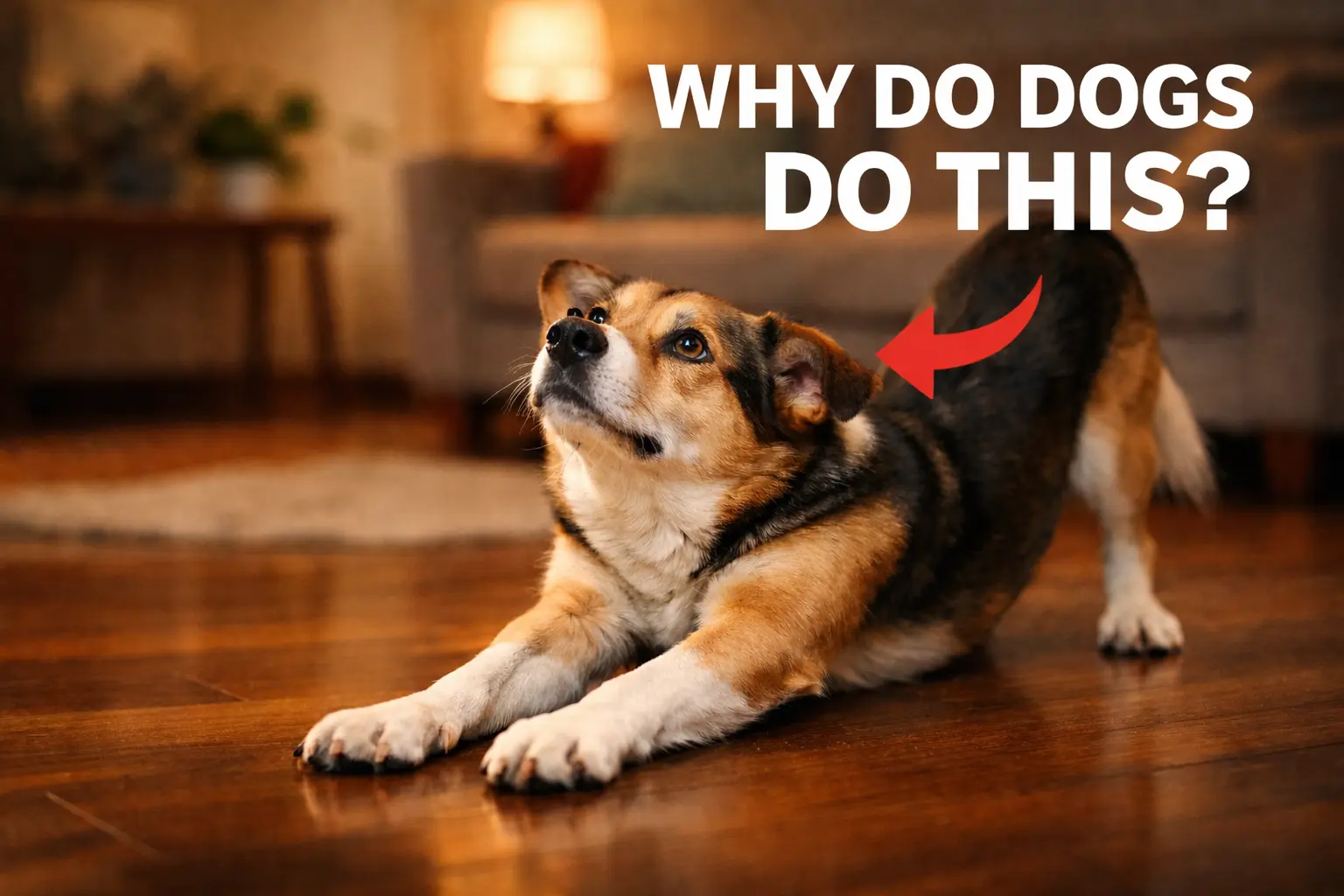
Have you ever walked past your dog and suddenly noticed them stretch right in front of you?
Many dog owners wonder why their dog stretches in front of them when they enter a room, and they assume this is just a normal body stretch. Dogs stretch their muscles after resting, much like people do when they wake up.
But when a dog walks toward you and stretches directly in your path, the moment can mean something more. Dogs often use small body movements to communicate how they feel. These quiet signals help them interact without barking, jumping, or demanding attention.
In this article, you’ll learn why dogs sometimes stretch in front of you, what this behavior means, and how to respond in a way that keeps the interaction calm and positive.
Watch: Why Does My Dog Stretch in Front of Me?
1. Understanding Why Your Dog Stretches in Front of You
At first glance, a stretch may look like a simple physical movement. Dogs stretch their muscles after resting, much like people do when they wake up in the morning.
However, when a dog walks toward you and stretches directly in front of you, the behavior can have a different meaning. In many cases, this type of stretch is part of your dog’s body language.
Why the Location of the Stretch Matters
Dogs are very aware of their surroundings. They often choose where to place their bodies depending on what they want to communicate.
For example, when your dog stretches alone on their bed or in a quiet corner, it is usually just a normal stretch. But when your dog stretches directly in your path or right in front of you, the action often becomes part of an interaction.
You can think of it as your dog gently entering the moment with you.
Instead of jumping, barking, or rushing forward, your dog slows things down. The stretch creates a small pause that naturally draws your attention without demanding it.
A Stretch That Becomes Communication
The location of the stretch is what makes it meaningful. Dogs rarely place themselves directly in front of someone by accident. When your dog stretches in a visible place, they may be signaling that they notice you and are open to a calm interaction.
In many situations, this behavior works like a polite greeting. Your dog is not forcing attention. Instead, they are simply making their presence known while watching how you respond.
These patterns suggest that the stretch is often connected to the interaction itself, not just to physical movement.
Recognizing this difference is the first step in understanding dog body language. What looks like a simple stretch can sometimes be a quiet form of communication between you and your dog.
2. Why a Dog Stretching in Front of You Is Different From a Normal Stretch
When people ask why does my dog stretch in front of me, the answer often lies in the difference between a simple body stretch and a social signal. Dogs stretch their bodies for many reasons. After sleeping, resting, or lying down for a while, stretching helps loosen their muscles and wake up their body. This type of stretch usually happens wherever the dog is resting. The dog stretches, relaxes, and then continues with what they were doing.
But when a dog stretches directly in front of you, the situation is often different. The key difference is timing and context.
Normal Stretching vs Social Stretching
A normal stretch usually happens right after a dog stands up from rest. However, if your dog stretches when you walk toward them, enter the room, or stop nearby, the movement may be part of an interaction between you and your dog.
Dogs often communicate through body movements instead of sounds. Instead of barking, jumping, or demanding attention, many dogs use calm signals to keep the moment relaxed. Stretching can be one of these signals.
You can think of it as your dog easing into the interaction. Rather than reacting quickly or rushing toward you, the dog slows the moment down. The stretch creates a short pause that allows both of you to settle before the interaction continues.
Why Timing Matters in the Interaction
This behavior is especially common in dogs that prefer calm greetings. Some dogs do not enjoy fast or overly excited movements. By stretching first, they help keep the interaction peaceful and controlled.
At the same time, your dog may be observing your reaction. Dogs are very good at reading human body language. While stretching, they may watch how you move, how quickly you approach, or whether your posture looks relaxed.
Because of this, the stretch becomes more than a simple physical movement. It becomes a small moment of communication where the dog is both expressing calm intent and observing what might happen next.
3. When a Dog Stretching in Front of You Shows Calm and Friendly Intent
In many cases, the reason why your dog stretches in front of you is that the dog is showing relaxed and friendly intent. The movement often acts as a gentle way for your dog to approach without creating excitement or tension.
Some dogs naturally prefer quiet and peaceful interactions. Instead of jumping or running toward their owner, they choose slower body movements that keep the moment relaxed. Stretching allows the dog to acknowledge your presence while keeping the atmosphere calm.
A Calm Way Dogs Greet Their Owners
You may notice this type of stretch when you come home, walk past your dog, or stop near where they are resting. Instead of reacting quickly, your dog stretches first. This small pause gives them a moment to adjust to the interaction.
A slow, relaxed stretch can also show that your dog feels comfortable around you. Dogs that feel safe often keep their body loose and move slowly. After stretching, they may remain calm, step closer, or quietly watch you.
How This Behavior Keeps the Interaction Balanced
Another reason dogs stretch during greetings is to keep the interaction balanced. Excited greetings can sometimes feel overwhelming, especially for dogs that are sensitive to fast movement or high energy. By stretching first, the dog slows the moment down and approaches in a more controlled way.
After the stretch, you might notice your dog looking at you, walking closer, or simply staying nearby. These signals usually mean they are open to interaction but prefer the moment to stay calm and relaxed.
When you recognize this signal, you can respond in a similar way. Moving gently, keeping a relaxed posture, and avoiding sudden movements helps match your dog’s calm energy. This kind of response strengthens trust and keeps the interaction comfortable for both of you.
4. When the Stretch Is About Space and Comfort
Another reason people wonder why my dog stretch in front of me is that the behavior sometimes appears when the dog is settling into a comfortable position.
Dogs do not always move away when they feel unsure or need a little room. Many prefer to stay nearby while quietly adjusting the situation. A stretch can give them a brief moment to slow the interaction down without creating tension.
How Dogs Use Stretching to Manage Personal Space
For example, this may happen if you walk toward your dog while they are resting. Instead of jumping up or moving away, the dog stretches first. This short pause helps them regain comfort and decide what they want to do next.
In this situation, the stretch can soften the interaction. When a dog stretches and then pauses, they may be signaling that they want the moment to stay calm. They might feel comfortable near you but are not ready for sudden movement or immediate touch.
This behavior is a healthy form of dog communication. Rather than reacting strongly, the dog uses a quiet signal to show how they feel. Many dogs rely on these subtle movements because they trust you will notice them.
Situations Where This Stretch Often Happens
You might notice this type of stretch when:
- your dog is resting and someone approaches
- the environment becomes busy or noisy
- your dog wants to stay nearby but needs a moment to settle
After stretching, the dog may move closer, remain where they are, or slowly walk away. These responses help show how comfortable they feel in that moment.
When you recognize this signal, you can respond by giving your dog a little space. Small changes—like slowing your movement or turning your body slightly to the side—can make the interaction feel less intense.
Understanding this type of stretch helps you recognize that dogs communicate comfort and boundaries through quiet body language.
5. How Dogs Use Body Language to Communicate With Their Owners
Dogs communicate far more through body language than through sound. While barking or whining can express certain needs, many of the most important signals dogs use are quiet physical movements. Stretching is one example of how dogs share information without making noise.
Every part of a dog’s body can send a message. Their posture, ears, tail, eyes, and overall movement work together to show how they feel. When a dog stretches in front of you, the action is often part of this larger system of dog body language.
Why Dogs Use Body Language Instead of Sound
Instead of reacting immediately, the dog may slow the moment down with a stretch. This brief pause allows the dog to observe what is happening and decide how to continue the interaction. At the same time, it gives the you a chance to notice the signal and respond calmly.
Other Signals Dogs May Show With a Stretch
Stretching is often combined with other subtle body signals. After stretching, a dog may:
- look toward you with relaxed eyes
- step forward slowly
- remain still for a moment
- turn slightly to the side
These small signals help explain what the dog is feeling. A relaxed body and gentle movements usually show comfort and calm interest. In contrast, stiff posture or sudden movement may suggest the dog feels uncertain or needs more space.
Learning to Read Your Dog’s Body Language
Because dogs rely heavily on body language, learning to notice these signals can greatly improve communication between you and your pets. When people start paying attention to these quiet cues, everyday interactions become easier to understand.
Reading dog body language does not require complicated training. It simply begins with observing the small details in your dog’s movements. Over time, these details reveal how your dog responds to different situations and how they prefer to interact with you.
6. How to Respond When Your Dog Stretches in Front of You
If you have ever asked yourself why does my dog stretch in front of me, the best response is usually to observe the dog’s overall body language.
Instead of reacting right away, allow your dog a moment to finish the stretch and see what they do next.
This stretch often creates a short pause in the interaction. When you allow that pause to happen naturally, you show your dog that you notice their signal. This helps the dog feel understood and keeps the moment calm.
Keep Your Body Language Calm
It also helps to keep your own body language relaxed. Dogs are very sensitive to human movement and posture. If you move too quickly or reach down immediately, the interaction may suddenly feel intense for them.
A calmer approach works better. For example, you can:
- pause briefly after the stretch
- keep your shoulders and posture relaxed
- move slightly slower than usual
- turn your body slightly to the side instead of standing directly over your dog
These small changes make your presence feel less overwhelming.
Let Your Dog Decide What Happens Next
After the stretch, watch what your dog does next. Their next movement often shows how they want the interaction to continue.
If your dog steps closer, looks at you, or gently approaches, they may be ready for friendly contact. You can respond by speaking softly or petting them in a calm and gentle way.
If your dog remains still, looks away, or moves slightly to the side, they may simply want to stay relaxed without more interaction at that moment. Respecting this signal helps maintain trust.
When you respond in this way, dogs learn that their quiet communication is understood. They do not need to bark, jump, or use stronger behavior to get attention. Over time, this helps create smoother and more comfortable interactions for both of you.
Conclusion
Now that you understand why my dog stretch in front of me, this small behavior becomes easier to recognize as part of normal dog communication.
Dogs often communicate through small body movements. When your dog stretches directly in front of you, the action is connected to the interaction itself. It can be a calm greeting, a way to slow the moment down, or a signal that your dog wants the situation to stay peaceful.
The key is to observe the context. Notice when the stretch happens, where your dog positions their body, and what they do afterward. These small details can help you understand the message behind the movement.
Many dogs communicate quietly. Instead of barking or using obvious behaviors, they often express themselves through subtle body language.
Notice these signals, you can respond with more patience and understanding. Over time, this awareness helps strengthen the relationship between you and your dog, making everyday communication calmer and more natural.
Recommended Reading
Related Video
If you want to see this behavior explained visually, watch the full video below.